Scroll down for their stories.
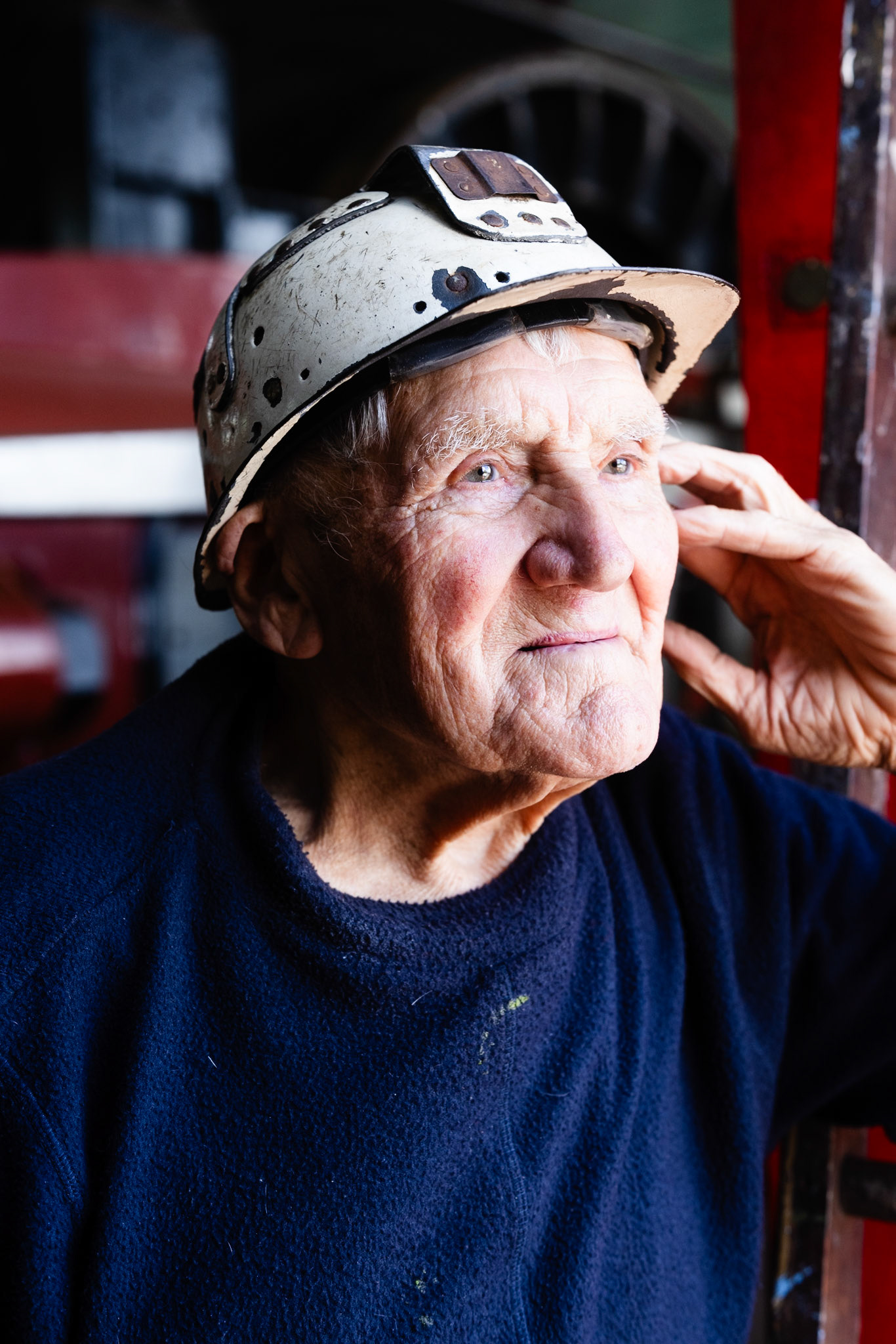
Eric
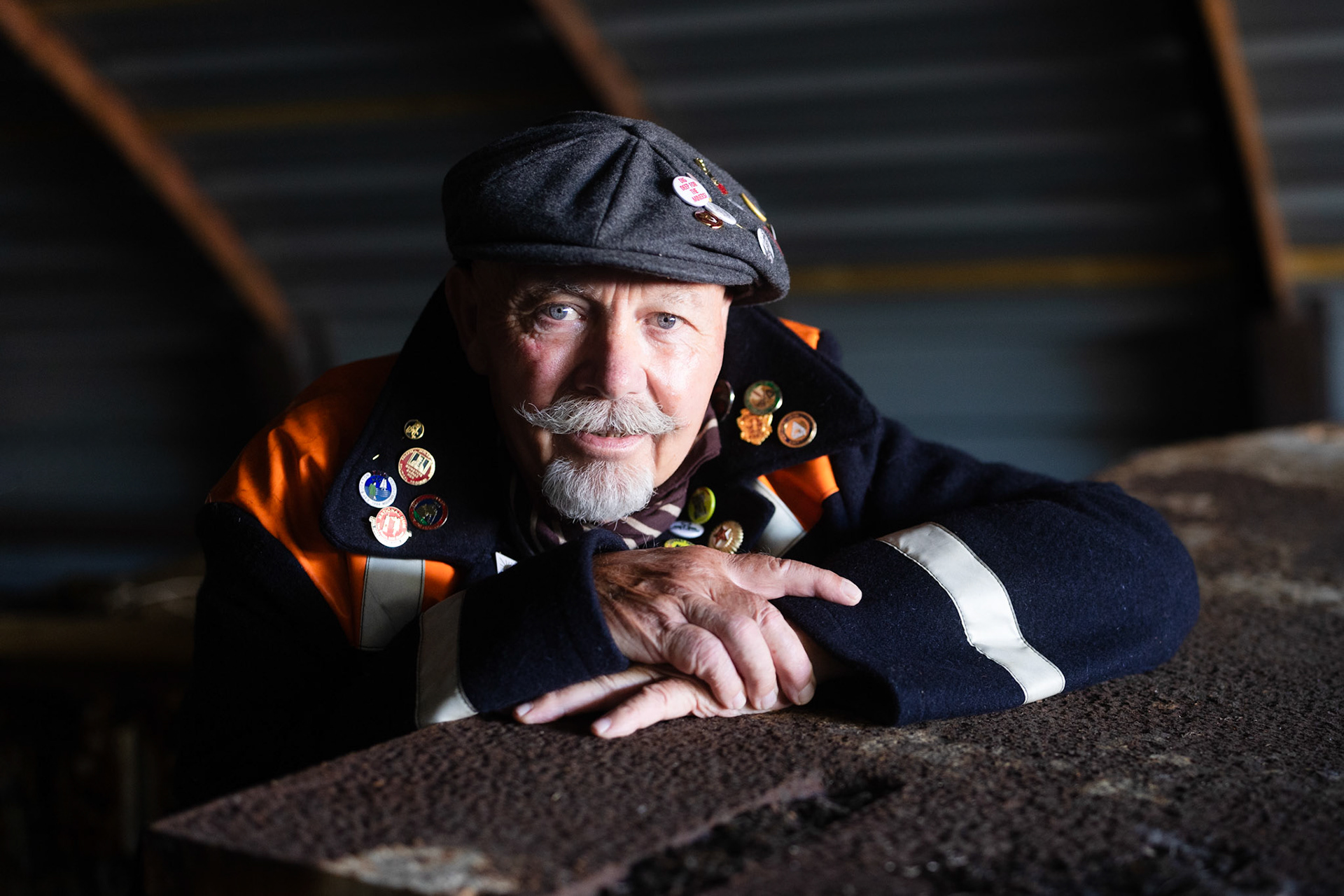
Stewart
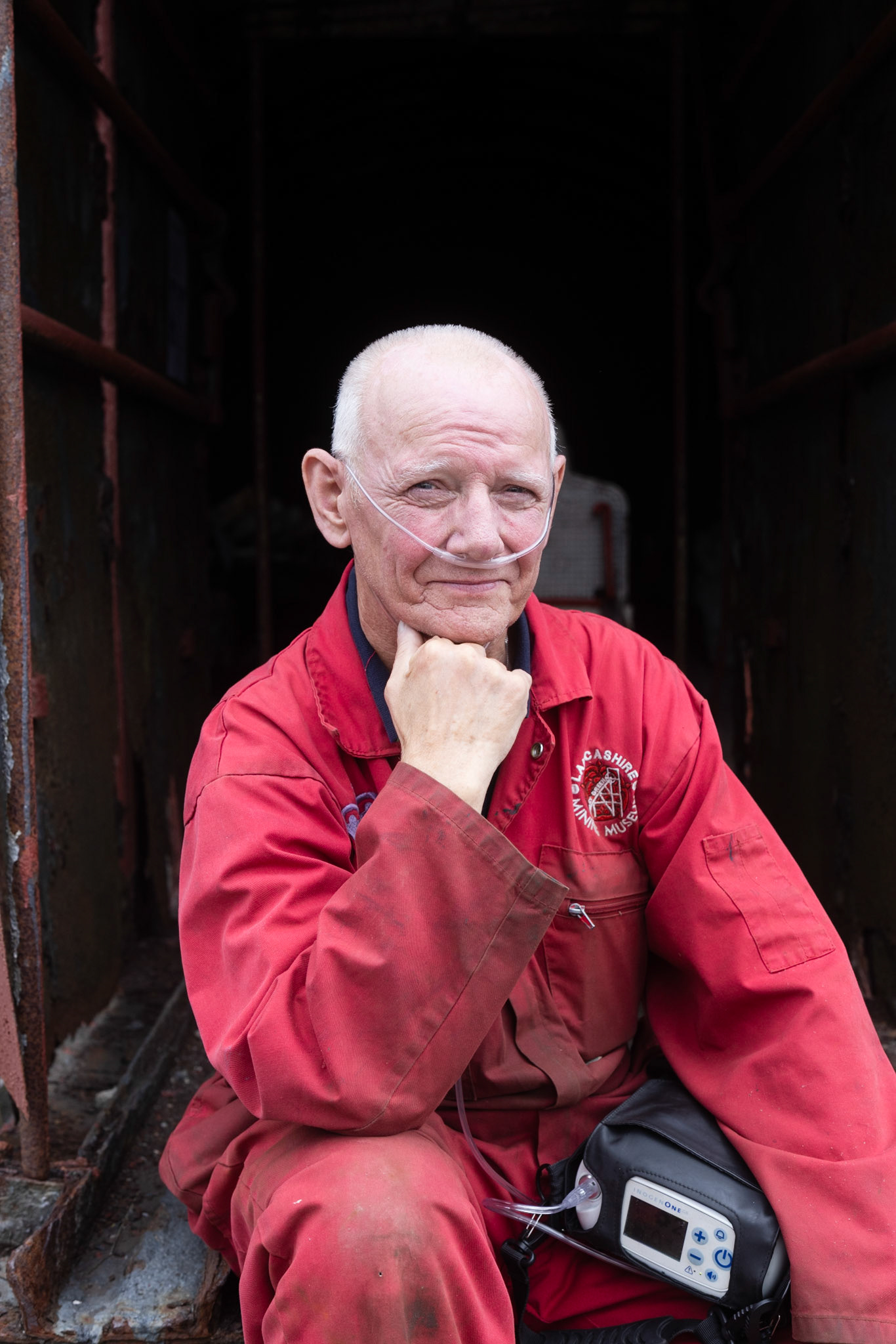
John
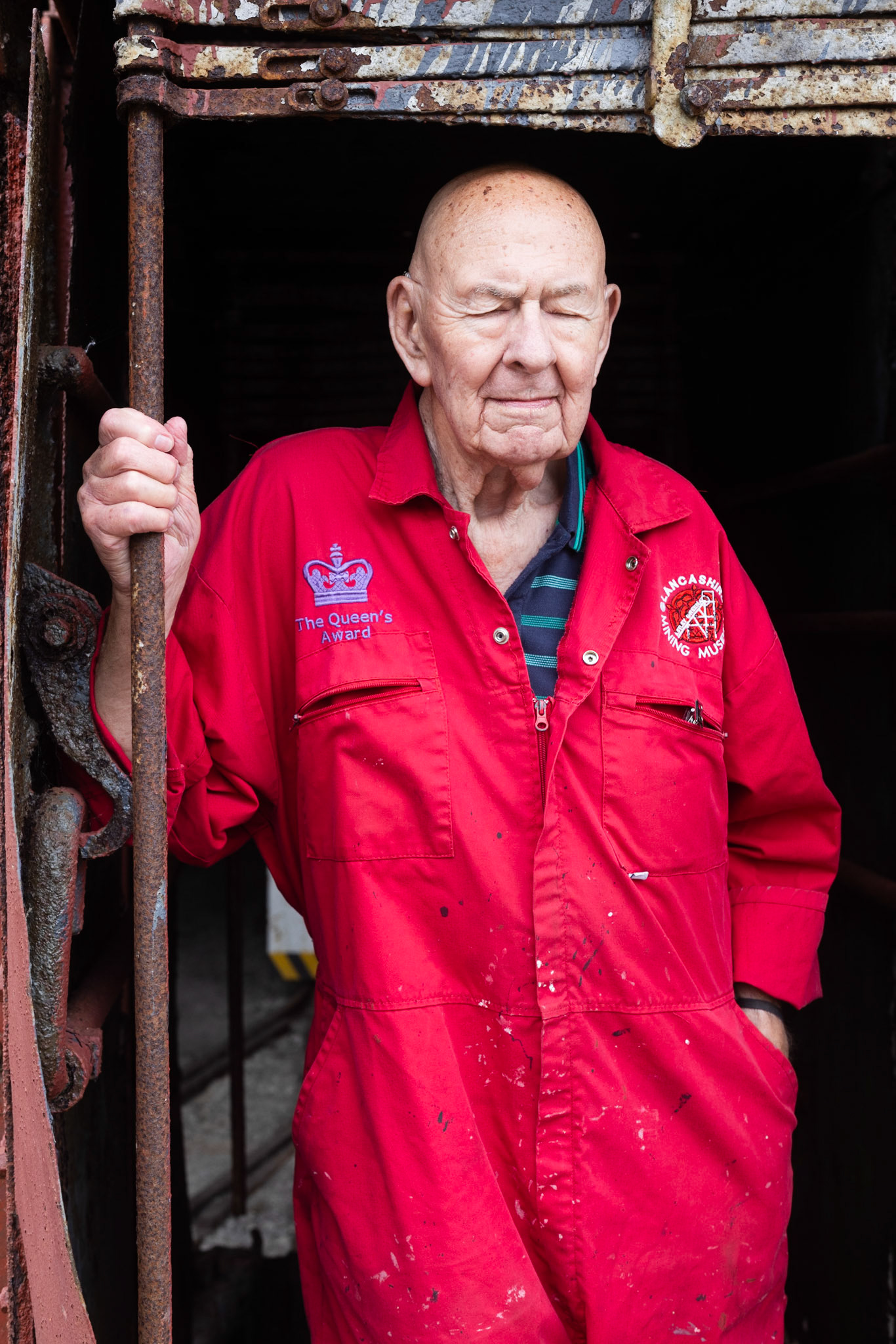
Derek
Sue
Steve
Marilyn
Brian
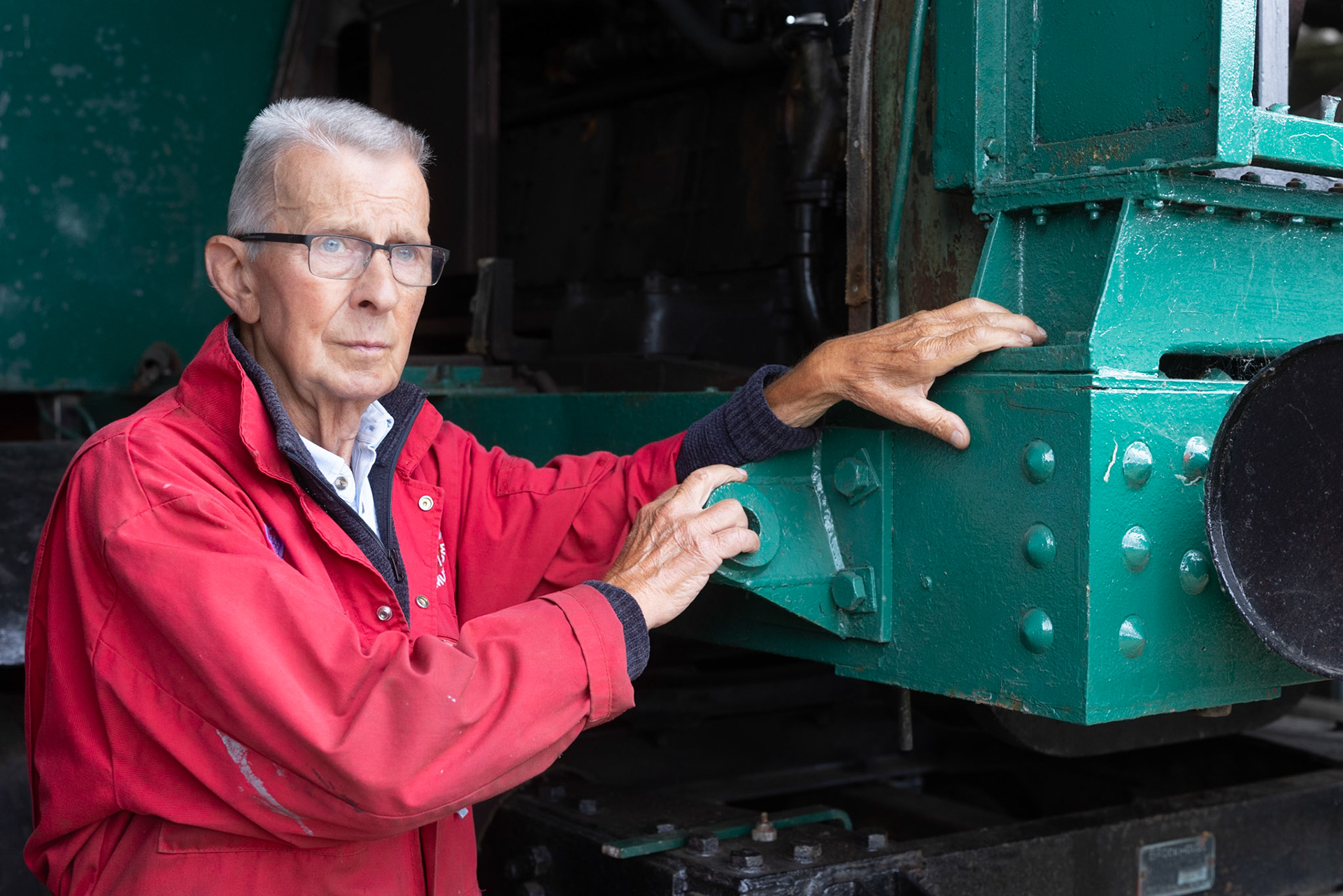
Ken
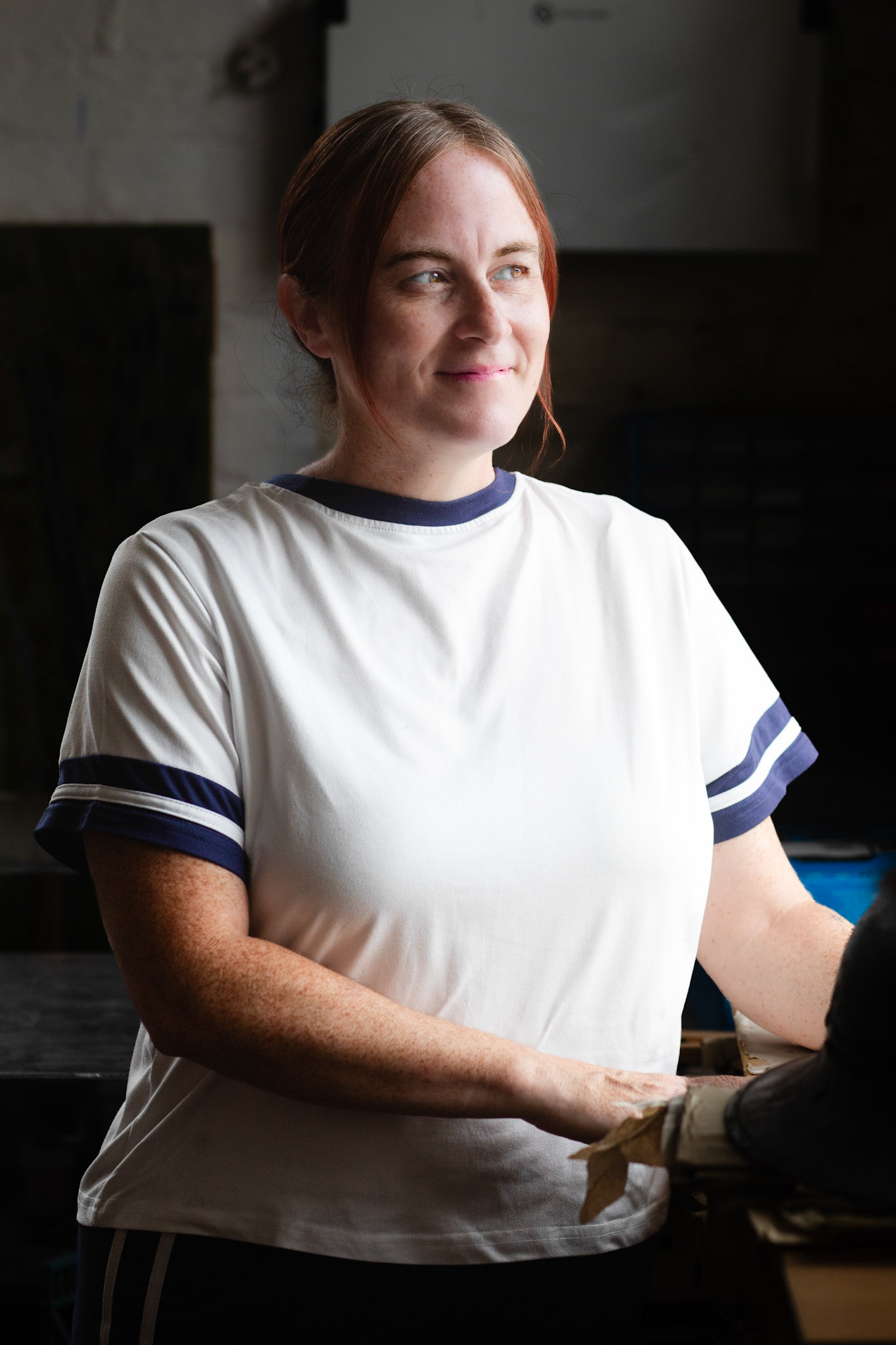
Kelly

Kate
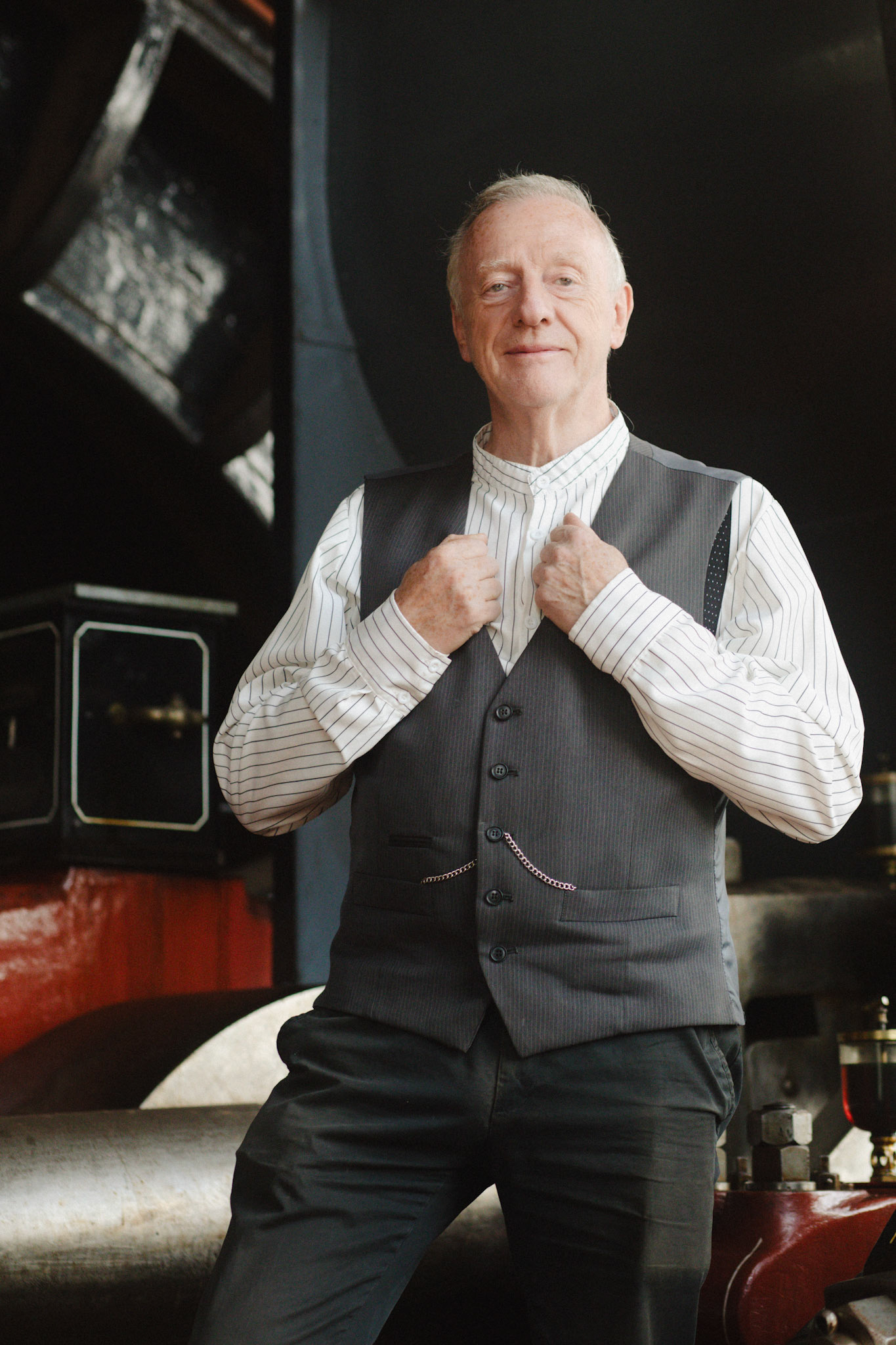
Colin
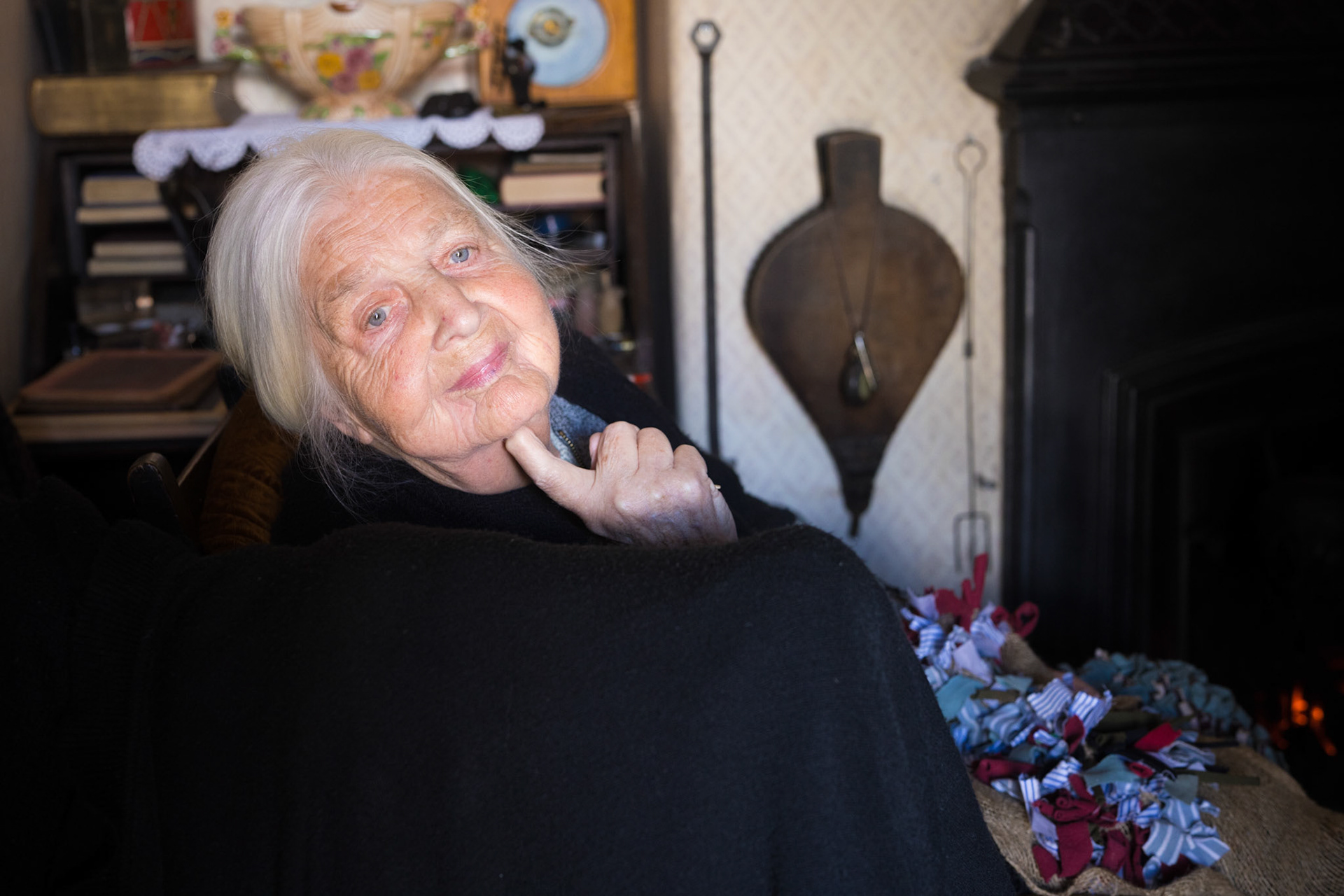
Marilyn - this all started with Marilyn.
I came to the mine for a steam rally. It was my first visit, and although the engines were impressive, they weren’t what held my attention. I found myself drawn instead to Marilyn.
Sitting beside her fire, I was captivated by her memories. She talked about a world I had never known: a time when cotton, coal and the canal provided work for local people and sustained entire communities. Her stories made me realise that the history of the mine wasn’t only held in its buildings, machinery and archives. It was held by the people who had lived alongside it.
When I returned home, I emailed the Chair of Trustees and asked who was recording these stories. These people are the history of this place. Their faces, memories and experiences are a living archive. He agreed that I could.
Marilyn was born in Leigh in 1944, during the Second World War. At fifteen, she went to work in the cotton mill. She calls it, 'clean, dirty work' and it was so noisy that they developed sign language. Me-moing was a system of exaggerated mouthing, miming and lip-reading used by mill workers because the machinery was so loud that ordinary speech was difficult or impossible. Each mill could develop its own dialect. There were plenty of jobs then—in cotton, coal and along the canal—and these industries were woven into everyday life. They provided not only employment, but a sense of belonging and community.
Visit the house at the mine and you might find Marilyn beside the hearth, making rag rugs and inviting people to sit with her. She carries the stories of life in the 1940s, 50s and 60s, and she is generous with them.
Later, in her forties, Marilyn married Eric, an ex-miner. It was a close-knit community, and she already knew his brother and sister-in-law. There was no need for dating apps when the person you might marry was already part of the fabric of the town.
Marilyn was my way into this story. She made me understand that when I photograph these people, I'm not simply making portraits of individuals. I am photographing a community—and preserving something of a world that is disappearing.
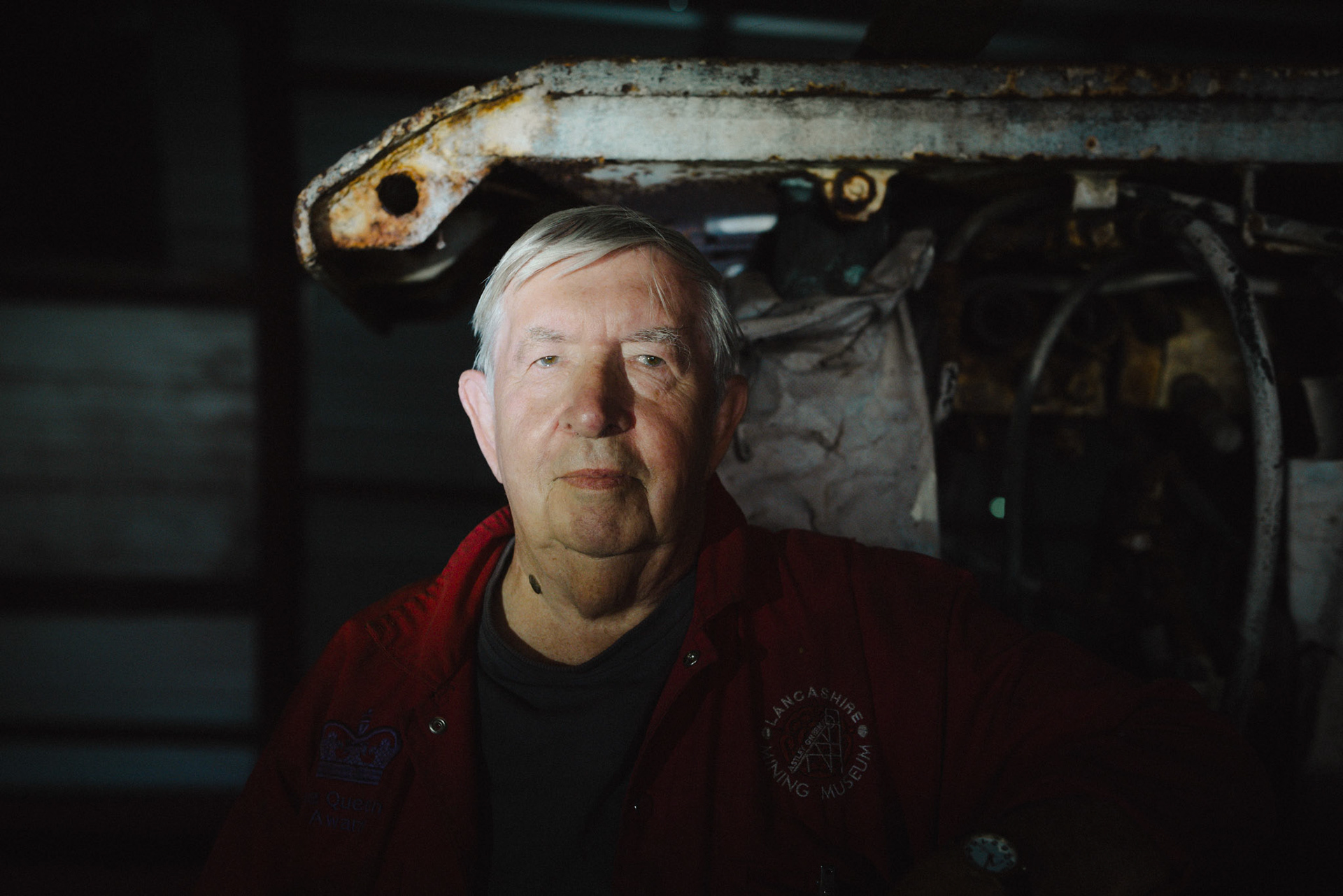
Brian - it was the best £10 my Dad ever spent.
When Brian was fifteen, his father paid £10 to let him leave Grammar School early. Brian has no regrets. He went straight to the training centre and from there to Bickershaw Colliery, beginning a working life underground.
Bickershaw was a dangerous place. Brian remembers the darkness, the low ceilings and the constant need to be aware of what was around you. He worked repairing locomotives, and for seven years attended college on day release to continue his training.
I asked Brian why, at fifteen, he had wanted to leave school rather than stay on. The answer was simple: there were plenty of jobs, and he didn't like school. But there was something else too. Working meant he could contribute to his family and help his parents. Perhaps, for Brian, being useful and becoming part of the working world felt more meaningful than staying in a classroom.
Sitting in the sun with Derek, he told me about the initiation of a new apprentice—a prank involving a carefully laid trap and a very cold canal.
His friend Paul suggested I try to write the title in dialect:
“Puing th' cat 'cross cut.”
And no cats were hurt during the making of the prank.
Colin — the Man Who Couldn’t Stay Still
It would be fair to say that Colin is a little obsessed with the engine house—and the huge beast that inhabits it.
Colin is a quiet man. But ask him about the engine and something changes. He becomes animated, almost unable to contain his excitement. He hops from foot to foot, his hands blurring as he describes the movement of the machinery.
The facts come quickly.
“It was built between 1910 and 1912 and could pull ten tonnes of coal up a half-mile shaft in less than two minutes.”
He imagines the people who designed it: someone sitting at a huge drawing board, working out how to make something on this scale possible. The imagination. The ingenuity. The sheer audacity of it.
And then there is the power.
Colin doubts we could design or build something like this today. We no longer have the means to cast something of this scale in the UK. The knowledge and infrastructure that made it possible have largely disappeared.
He talks about steam with something close to reverence. Steam. What it could achieve was phenomenal.
Standing beside the engine, Colin seems almost to inhabit the movement himself. His hands trace the machinery, his feet follow its rhythm. The engine gives him a language of motion.
Ken - from Tyldesley to Venice
Colin's fascination with the engine made me think about the skills and ingenuity that grew out of this industrial world. Ken's story took those skills much further than I expected.
Ken was born in 1943 and left school at fifteen. His first job was on the railways, working in signal and telegraph at Tyldesley, near Leigh.
It wasn’t particularly well paid. To make a decent wage, Ken had to work Sundays, when he earned double time. Even then, his girlfriend, who worked in an office in Manchester, earned more than he did.
So Ken left the railways. A friend introduced him to the drilling business, and he more than doubled his wage.
His work involved boring holes into the ground so that engineers could take samples and understand what lay beneath the surface. Was the ground suitable for a high-rise building? Could it support an industrial plant? His work helped determine what could safely be built and where.
Over time, Ken became something of a specialist. His work eventually took him far beyond Leigh. A professor from Manchester University, who was working as a consultant on a project investigating why Venice was sinking, took Ken with him.
For two months, Ken lived in Arsenale, on the Venice islands. At lunchtime he would go to a workers’ canteen and have wine, and in his free time he mostly walked around Venice. Later, another job took him to Hong Kong.
Ken’s story is a reminder of the unexpected paths that working life could take. What began with signal and telegraph work on the railway eventually led to specialist drilling, international projects and two months living in Venice. His working life reached far beyond the communities around the mine, but his story remains rooted in the same world of work, skill and opportunity that shaped so many lives here.Kate
Kate - has always wanted to know how things work.
Colin's fascination with the engine made me think about the people whose lives have been shaped by a fascination with making things work.
As a child, Kate loved being taken inside factories, fascinated by the great machines and the things they could do. She was drawn to their scale, their movement, their ingenuity — the extraordinary meeting of beauty and function.
Kate studied Physics and Geology and went on to lecture at Salford University for more than two decades. Later, she moved into digital forensics, where the evidence was often invisible. Hidden inside computers. Buried in data. Waiting to be found.
At the mine, she has returned to the physical world.
Now she works with the machines themselves, particularly the train, and is building a solar-powered water feature for the sensory garden. She welcomes the opportunity to design and make, allowing a part of her creativity that had been less visible in her working life to grow.
She is fascinated by structures such as the Anderton Boat Lift — immense pieces of engineering where every element has a purpose, and yet somehow the whole becomes beautiful.
But it isn't only the machines that have drawn Kate here.
“I work outdoors, in a really welcoming community, and I love being around the people.”
There is something about this place that is difficult to describe. The machinery is physical, but so is the history. The landscape holds the work; the people carry the memories.
I feel it myself when I am here — that the older miners somehow lend me their brotherhood, allowing a little of their energy to rub off on me.
Perhaps this is what Kate has found at the mine: a place where the things she has always been drawn to — how things work, how things are made, how people make them work together — exist side by side.
From the invisible evidence of digital forensics to the great physical machinery of the mine, she has moved from looking for what cannot be seen to putting her hands on the world and helping it move.
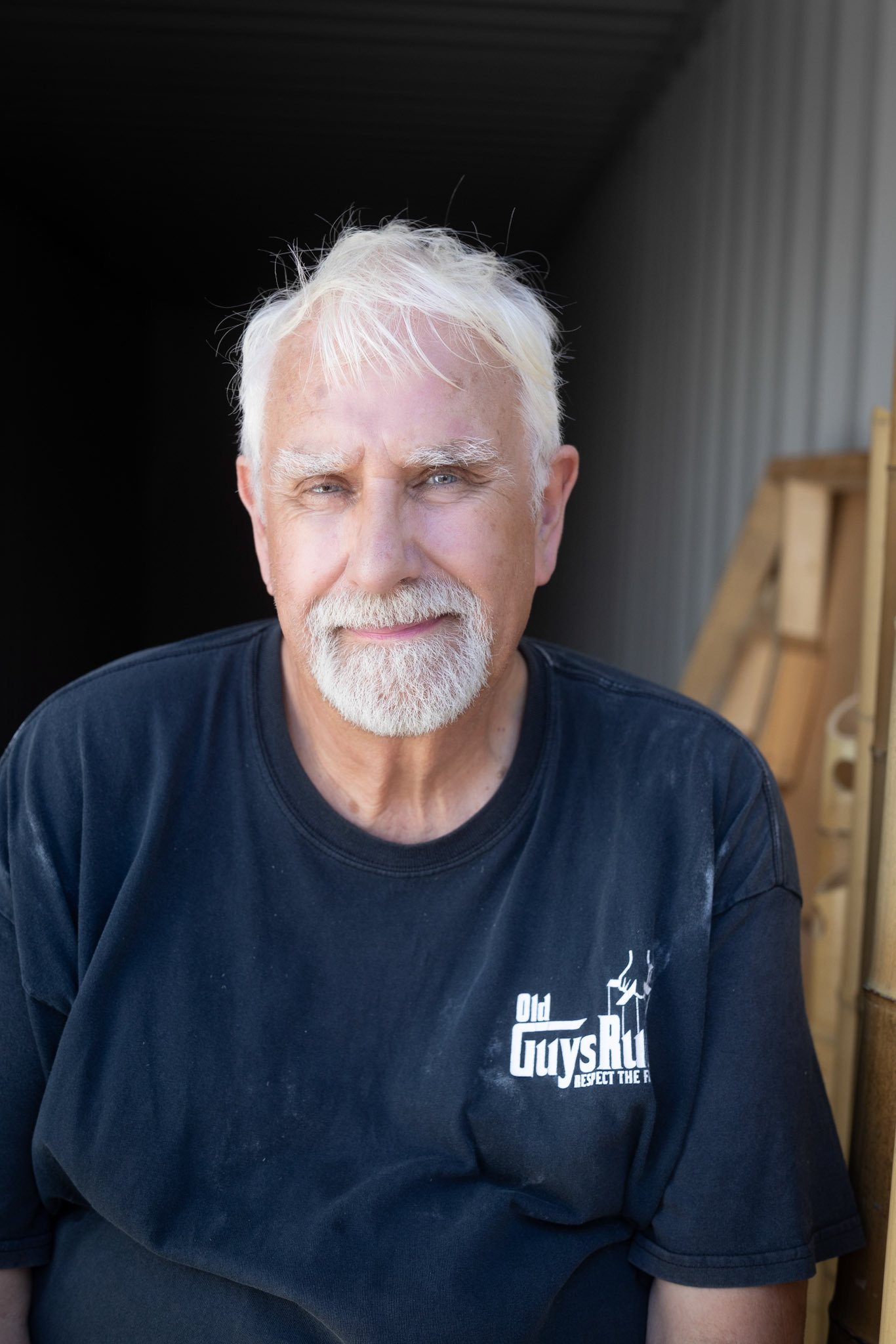
Steve - never went down the pit, but its veins ran through his childhood.
For all the fascination with the machinery, the mine was always about people too.
Steve grew up in Leigh, a place built for the colliery, where almost every family had a miner. The pit shaped the village, its rhythms and its people. If you wanted different work, you travelled for miles on buses that were not always reliable.
Steve chose a different path. He became a hairdresser, sold furniture, worked in a carpet factory and assisted an electrician, moving from job to job, always looking for something that might feel like a calling.
He had grown up hearing the stories of the pit. Was he searching for the drama of the work, the danger, but above all the camaraderie of the men underground? He remembers hearing how they washed one another's backs after a shift. There was hardship, but there was also belonging.
Steve retired just before Covid changed everything. He spent his days tinkering in his shed, making things alone.
And then, slowly, he realised that making things wasn't enough. He wanted people.
At the museum, he volunteered to help build the railway. What began as something to fill his time became something that filled his life. He found himself making, fixing, solving problems — and working alongside others.
“To be honest, I absolutely love it here.”
I wonder if Steve has finally found the thing he spent so many years looking for. Not a grand calling, perhaps, or one earth-shattering moment when life suddenly declares its purpose.
Something quieter.
A length of track laid correctly. A problem solved. Something broken now working again.
Perhaps a life is not built from the great moments we imagine will give it meaning, but from these small acts — making, mending, showing up, belonging.
Steve spent years looking for the big thing.
Perhaps he was building it all along.
Kelly - what remains of a life when the person who lived it is gone?
Steve found something through making and doing. Kelly works with what has already been left behind.
Sometimes it is a photograph, objects, a record of where someone worked. Sometimes it is a story remembered by a grandchild. These fragments are what Kelly cares for in the coal-mine archive.
Surrounded by photographs, documents and old artefacts, she is piecing together the lives of people who spent their working days underground. She understands that an archive is not simply a collection of old things. It is a way of saying: these lives mattered, and they are worth remembering.
Did that understanding come from her own family? Kelly's Irish grandmother left Ireland with young children and built a life in England, carrying her family and its history with her. Kelly has photographs of that life — small pieces of evidence passed down through generations.
Standing among the mine records, she began to think about what we inherit. We often talk about trauma passing through families, she says, but perhaps resilience can be inherited too.
For Kelly, the archive is therefore more than a place of preservation. It is a living connection between generations — between the people who worked here, the families they left behind, and those who come after them.
An archive is full of evidence. But perhaps its greatest purpose is not to tell us what happened. It is to make sure that someone was here.
By gathering, cataloguing and caring for these fragments, Kelly is helping to keep the miners' lives visible — and giving the next generation something to inherit.
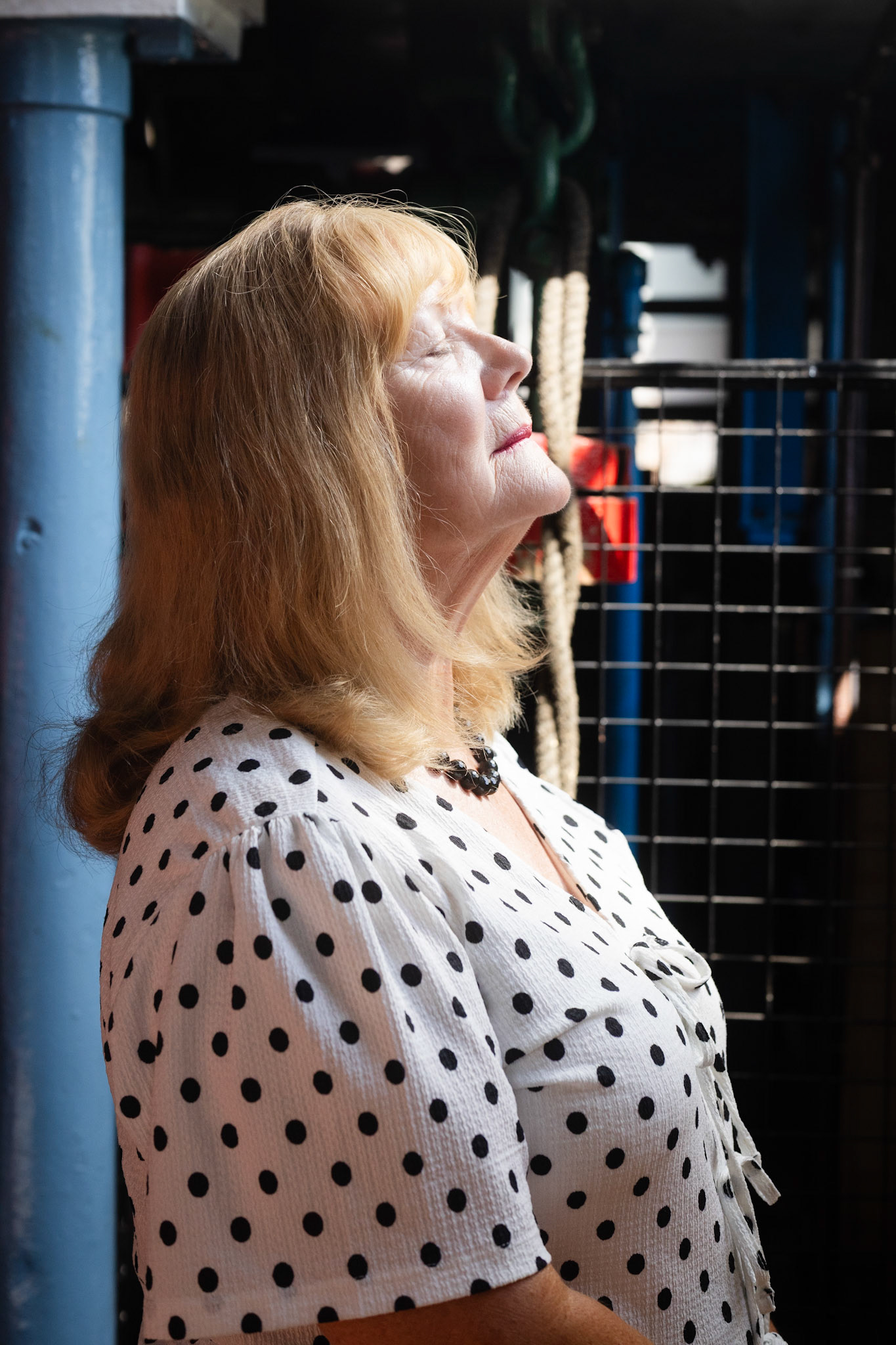
Sue — A Striking Woman
Kelly's work asks what we inherit. Sue's story shows that what was inherited was not only a job, but a whole way of life — and that women carried much of its weight.
Sue wasn't from a mining family, but mining was everywhere around her. She grew up in what was known as “Cement City”, a village where many of her friends' families worked at the collieries. She met Stewart when she was thirteen; they began courting when she was seventeen and then married.
By 1983 they had a young son, Gareth. Sue was secretary to a director of a large company, but when the miners' overtime ban began at Bold Colliery she stayed at home with the baby for a while before returning to work part-time.
Four weeks later, the strike began.
Sue remembers seeing the local colliery gates and the men on the picket lines from her office. Their mortgage was £32.60 a month, with an endowment of just £7. She could no longer pay either. She speaks warmly of the Building Society manager who helped them through that period. They rented their television and had a BT phone line; both went. Their car was repossessed.
Yet Sue never doubted the strike.
“I totally believed in the strike. It was close to my heart. I had a conviction.”
The reality of the strike became increasingly difficult. Stewart was arrested five times and Sue carried the fear he would be jailed. Her family needed a police escort to leave the house. The picket lines could be violent, and Sue knew that police attacked both men and women.
So she worked in the soup kitchens. She collected clothes, took a bucket for donations, went to demonstrations and marched alongside other women. Women shared childcare and looked after one another's children so that some mothers could work. The men were on the picket lines, the women held everything else together.
The community pulled together because there was little else to rely on. During a bitter winter, families foraged for firewood because they had no heating. People who had very little shared what they had.
But solidarity came at a cost. Sue's own parents turned their backs on them.
“It still hurts that they did not help their grandson, put food on our table, buy a child his shoes and warm clothes. He was only two years old.”
The strike divided families and communities. It was not simply a protest about wages, but a fight to preserve a way of life — whole villages, communities and the futures of younger families.
Looking back, Sue says her understanding of the strike developed over time. What began as a decision to stand beside her husband became something much larger: a recognition of the complexity of the struggle, and of the extraordinary role women played in keeping families and communities going.
Sue may have entered the story as a miner's wife, but she became one of the women who carried it.
John — The Men Made the Mine
Sue's story shows what happened above ground. John's takes me back beneath it.
John's mother was a pit brow lass, one of the women who worked above ground sorting coal. Mining was part of the landscape of his childhood, so when he left school at sixteen, he went straight to the training centre in Moston. After a four-year apprenticeship at Bickershaw Colliery, he joined the coal face, where he worked until the pits closed in 1992.
He loved it.
The shifts were long. The air was hot and thick with coal dust. Every day carried the possibility of injury. Yet when John speaks about the pit, it is not hardship he remembers first, but the men.
“My life depended on him, and his on me.”
It is a simple sentence, but it explains everything. Underground there was little room for pride or pretence. Survival rested on absolute trust. When accidents happened, as they often did, men did not leave one another behind. They carried their injured mates back to the surface together.
John's story is both joyful and bittersweet. He still speaks of the pit with affection, but the years underground left their mark. Today he lives with complex lung disease and relies on oxygen. The coal dust that once settled quietly on his skin has remained with him far longer than any shift ever did.
Eric — When Men Were the Machines
John's story reminds me that the consequences of mining can remain long after the work itself has ended. Eric takes me further back, to a time when coal was still worked largely by hand.
Eric began working underground at Nook Colliery, later moving to Gin Pit and Chatters, before finishing at Agecroft Colliery in 1968 spending about twenty-two years in the pits, he worked in an industry where the physical labour was still largely done by the men themselves.
After descending the shaft, he would often walk another two or three miles to reach the coal seam. Once there, there wasn't room to stand. He worked kneeling or sitting for hours, digging and pushing coal by hand.
When Eric was 24, everything changed.
He was working in a tunnel on his hands and knees when the roof collapsed. The weight of the rock trapped him, crushing the air from his lungs. He spoke quietly about blacking out before other miners pulled him free. The pressure had burst the capillaries in his eyes and, for a time, he couldn't see.
His spine wasn't broken, but it was permanently damaged. As we talked, he invited me to feel it. The bones rise sharply beneath his skin, his back curving where the roof left its mark nearly seventy years ago.
There was no sick pay. Even treatment at a hospital would cost money. It was weeks before he was seen by a specialist at Leigh Infirmary. Yet once he was able, he returned underground.
He continued mining until 1968 before eventually becoming a bus driver.
Listening to Eric, I was struck by how matter-of-fact he was. There was no self-pity and no attempt to glorify the past. Just the quiet certainty of someone describing the life he knew.
Derek — The Courage to Return
Eric returned underground after being injured. Derek's story is about returning for another reason: fear.
Derek was just sixteen when he began his apprenticeship at Astley Green Colliery in 1954. Now eighty-eight, he still speaks about mining with remarkable warmth. As a mining engineer, his job was to repair the machinery that transformed the coal industry. Ironically, as the pits became more modern, his work became more demanding. Every new conveyor, shearer and cutting machine brought another piece of equipment that could fail deep underground.
Sitting beside his friend, John, Derek reflects on the years beneath the surface with quiet acceptance. Good health, he believes, was often a matter of luck. Some men reached old age untouched by the dust, while others developed lung disease or carried injuries for the rest of their lives. He considers himself fortunate.
Yet what he remembers most is not the machinery, but the people.
He forgot his sandwiches today. Before long, every man around the table had broken off a piece of his own lunch. No one ate while someone else went hungry. That, Derek says, was simply the way it was. Underground, men looked after one another. The camaraderie was as much a part of mining as the coal itself.
His most revealing story is one he tells almost matter-of-factly. One morning, he reached the pithead and found he could not step into the cage. He cannot explain why. Something inside him simply refused.
For the next three years he delivered milk instead.
But when his son won a place at grammar school, Derek knew he needed the wages the pit could provide. Somehow, he found the courage to return underground, facing the fear he could neither name nor fully understand.
It is a reminder that the cost of mining was not always visible. The weight men carried was as often borne in silence as it was in their bodies.
Life in the coalfields was shaped by shared rhythms as much as shared labour. Every summer came Wakes Week, when the collieries, the mills and many of the local shops closed together. For two precious weeks the whole community stopped. Families headed to the seaside, neighbours travelled together, and the villages emptied almost overnight before returning to the routines of pit, mill and workshop once more.
Listening to Derek, it becomes clear that the story of mining is not simply one of industry. It is a story of friendship, duty, fear and resilience, held together by communities that understood what it meant to rely on one another.
Stewart — From 1620 to the Strike
And then there is Stewart.
His story takes everything I have heard — family, work, danger, community, loyalty and solidarity — and stretches it across generations.
Stewart Brown's family history reaches back to 1620. Every generation before him worked underground. He was the last.
The mine was brutal.
“I've seen lads killed in front of my eyes. Underground you don't break legs or fingers, you lose them.”
Nearly 4,500 feet below the surface there was no daylight, only heat, dust and darkness.
“You put your hand in front of your face and you can't see it.”
Entire shifts were spent bent double because there wasn't room to stand. At Bickershaw Colliery, temperatures could reach 55°C. It was, Stewart says, a place almost impossible to explain to anyone who had never worked there.
Yet when he speaks about mining, it is never with self-pity. He talks instead about pride, comradeship and belonging. For families like his, mining wasn't simply employment. It was an inheritance.
That same loyalty defined him during the 1984–85 Miners' Strike. Stewart never missed a day. As driver of the pickets' "Battle Bus", he travelled the country, taking miners wherever they were needed. He was arrested five times, spent days in police cells, and became such a familiar face that, he laughs, the court usher knew him by his nickname before he even walked into the courtroom.
Reflecting on the strike, Stewart says,
“She (Prime Minister Margaret Thatcher) said we were the enemy within and vowed to starve us back to work. I believe this is one battle she lost. We should be thankful to the people who supported and stood by us, whether on the picket line, in the soup kitchens, our families, and especially the public who dipped into their pockets throughout the year.”
When the pits closed, Stewart's commitment to collective action did not. Over the decades he continued to stand on picket lines with doctors, nurses, paramedics, teachers, communication workers, rail workers and bus workers. For him, solidarity has never belonged to one industry alone.
He also remembers marching with fellow miners at the 1985 Lesbian and Gay Pride march in London. The NUM's support, he believes, helped challenge outdated attitudes and demonstrated that working-class solidarity could extend far beyond the coalfields.
Looking back, Stewart sees a clear thread running through his life:
“As a very young man, I got sacked for starting a union, which ignited my passion to fight for the oppressed.
I can honestly say I never took a backward step. The days of struggle should never be forgotten.
I will continue to support strikers on any picket line."


